Occupancy is Not Vitality
July 2026 | Dr Jason FrostAndy Burnham’s decision to reduce business rates for hospitality businesses while increasing the burden on vape shops and other lower-value retail uses has inevitably sparked debate about winners and losers. Yet from a placemaking perspective, the significance of the policy extends far beyond taxation. It reflects a growing recognition that the success of town centres is determined not simply by economic activity, but by the quality of experience they provide to local communities.
This is a conclusion that Genecon has encountered repeatedly through its work with towns and cities across the UK. Most recently, Genecon was commissioned to undertake extensive community engagement, consultation and evidence-gathering which provided an evidential basis that helped to inform the Leigh Pride in Place Programme. Through surveys, town centre engagement events, stakeholder workshops, “town safaris” and discussions with more than 1,500 residents, a remarkably consistent picture emerged of what people value in the places where they live.
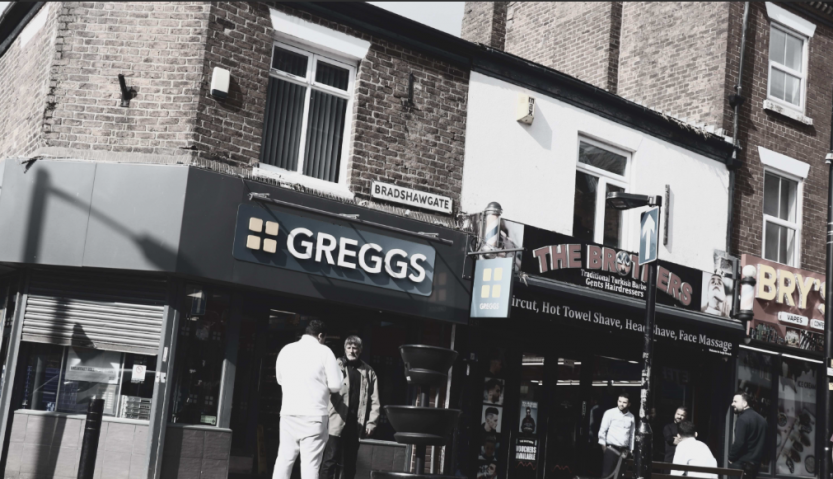
What residents spoke about was not business rates or fiscal policy. Instead, they talked about pride, safety, identity, vibrancy and belonging. They wanted places where they could meet friends, spend time with family, participate in community life and feel confident about the future of their town. Unsurprisingly, many of the concerns they identified were linked to the visible decline of the high street, rising vacancy levels, anti-social behaviour and the growing prevalence of uses that were seen to contribute little to the social life of the town centre. Residents repeatedly referenced the increase in vape shops, discount retailers and other low-value uses as symptoms of wider decline, while expressing a desire for more cafés, restaurants, cultural venues, markets and community-focused businesses.
The Leigh Evidence: Communities Care About Quality, Not Just Occupancy
One of the most striking findings from Genecon’s engagement work in Leigh was that residents rarely discussed vacancy rates in isolation. Their concern was with what those vacancies were being replaced by and what that meant for the character of the town centre. While traditional economic indicators tend to view any occupied unit as preferable to an empty one, communities often take a different view.
Residents described a town centre that felt increasingly dominated by uses which did little to encourage social interaction, dwell time or civic pride. Conversely, the businesses most frequently mentioned as desirable additions to the town centre were cafés, restaurants, bars, independent retailers, cultural venues and leisure attractions. These were valued not only because they generated economic activity but because they provided opportunities for people to interact, spend time together and create positive experiences associated with the town centre.
As a result, the Leigh Town Board identified regenerating the town centre, improving the visitor experience, expanding cultural activity and supporting a vibrant day and evening economy as core priorities for the town’s future. These objectives were directly informed by the evidence and consultation work undertaken by Genecon on behalf of the programme.
Why Burnham’s Reforms Align with What Communities Are Saying
Viewed through this lens, Burnham’s policy is less about penalising certain businesses and more about recognising the different contributions that businesses make to place.
Hospitality businesses provide something that communities consistently tell us they want from their high streets: opportunities for connection. They function as social infrastructure, creating spaces where relationships are formed, community networks develop and local identity is reinforced. They encourage people to stay longer, support evening economies, increase footfall and help underpin wider cultural and community activity.
The findings from Leigh suggest that residents intuitively understand this distinction. Throughout Genecon’s engagement work, people consistently linked successful town centres with places that offered experiences rather than simply transactions. They wanted markets that acted as community hubs, public spaces animated by events, independent food and drink businesses, and high streets that felt welcoming and alive. The aspiration was for a town centre that serves as the heart of community life rather than simply a collection of retail units.
Burnham’s reforms appear to recognise this reality. They represent an attempt to align economic incentives with placemaking objectives by supporting those businesses that contribute most directly to vitality, sociability and local identity.
What This Means for Regeneration
The wider lesson from Leigh is that residents judge places differently from economists. Metrics such as occupancy levels, rateable value and footfall remain important, but they are ultimately proxies for something deeper: whether people feel proud of their town and want to spend time there.
Genecon’s work on the Leigh Pride in Place Programme demonstrated that communities consistently prioritise clean, safe and welcoming environments, attractive public spaces, cultural activity and businesses that foster social interaction. They care less about whether units are occupied than whether those uses positively contribute to the life of the town.
For that reason, Burnham’s reforms can be understood as part of a broader shift in regeneration thinking. The debate is moving away from simply filling empty shops and towards creating places that people genuinely value. If the experience of Leigh is representative of wider public opinion, communities are likely to welcome policies that prioritise quality of place, social interaction and civic pride over a narrow focus on occupancy and commercial activity alone. Genecon’s engagement work suggests that this is precisely what many residents have been asking for all along.
< Back to News, Views & Insights
More articles
Occupancy is Not Vitality
24th July 2026Andy Burnham’s decision to reduce business rates for hospitality businesses while increasing the burden on vape shops and other lower-value retail uses has inevitably sparked debate about winners and losers. Yet from a placemaking perspective, the significance of the policy extends far beyond taxation. It reflects a growing recognition that the success of town centres […]

Local Government Reorganisation: Challenges, Opportunities, and Lessons from Experience
1st September 2025Local government reorganisation (LGR) is a process that is fraught with challenges. My experience supporting a response to the UK Government’s invitation for local government reorganisation proposals highlighted just how complex it can be. Achieving agreement among councils with different political persuasions, cultural identities, and varying strengths and weaknesses requires impartiality, sensitivity, and careful negotiation. […]

Same Ship, Different Charts: Politicians vs Officers in Local Government Reorganisation
20th August 2025Local government reorganisation — including council mergers, new authority structures, or redrawn boundaries — is never just an administrative exercise. It’s a high-stakes process that raises the fundamental question: what is the purpose of local government? Politicians and officers share the same ultimate goal — delivering better services for the community — but they often […]